




Starting your hiking journey can feel overwhelming when you look at all the amazing trails across America. You might wonder where to begin, what to bring, or whether you’re fit enough for the adventure. The good news is that the United States offers countless beginner-friendly trails that let you experience nature’s beauty without pushing yourself too hard. This guide will help you discover the perfect trails to start your hiking adventure with confidence.
- Why Hiking is Perfect for Everyone
- Top Beginner-Friendly Hiking Trails Across America
- Angels Landing Trail, Zion National Park, Utah
- The Emerald Pools Trail, Zion National Park, Utah
- Jenny Lake Loop, Grand Teton National Park, Wyoming
- Yosemite Valley Loop Trail, Yosemite National Park, California
- Cascade Canyon Trail, Grand Teton National Park, Wyoming
- Old Rag Mountain, Shenandoah National Park, Virginia
- Essential Tips for Your First Hiking Experience
- Understanding Trail Difficulty Ratings
- Making Hiking a Regular Habit
- Frequently Asked Questions
Why Hiking is Perfect for Everyone
Hiking is one of the most accessible outdoor activities you can enjoy. Unlike many sports that require expensive equipment or special skills, hiking just needs a good pair of shoes and the desire to explore. You can start with easy walks and gradually build up to more challenging adventures as your confidence grows.
The health benefits of hiking go beyond just physical fitness. Walking through nature reduces stress, improves your mood, and helps you disconnect from the busy digital world. Studies show that spending time outdoors can lower blood pressure, boost your immune system, and improve your overall mental health. Even a short hike once a week can make a real difference in how you feel.
For beginners, the key is choosing trails that match your current fitness level. You don’t need to climb mountains on your first day. Starting with gentle, well-maintained paths helps you build endurance while enjoying the experience. As you gain confidence, you can gradually explore longer and more challenging routes.
Top Beginner-Friendly Hiking Trails Across America
Angels Landing Trail, Zion National Park, Utah
While the full Angels Landing hike is quite challenging, the first section up to Scout Lookout is perfect for beginners who want a taste of adventure. This portion gives you stunning views of Zion Canyon without the scary chain section at the top. The trail is well-maintained with paved sections, making it easier on your feet.
The hike to Scout Lookout is about two miles each way with some elevation gain, but you can take your time and rest whenever needed. The views along the way are incredible, with red rock formations towering around you. Many beginners complete this section and feel proud of their accomplishment without feeling overwhelmed.
The Emerald Pools Trail, Zion National Park, Utah
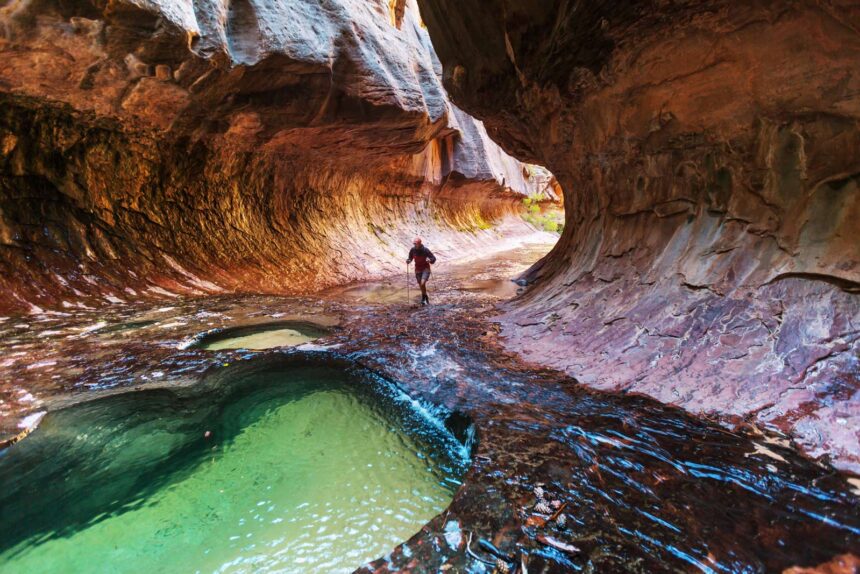
Another fantastic option in Zion is the Emerald Pools trail system. You can choose between the Lower, Middle, and Upper Pools depending on your energy level. The Lower Emerald Pool is the easiest, with a paved path that even young children can manage. The trail takes you to a beautiful waterfall and pool surrounded by lush vegetation.
This trail is especially magical in spring when the waterfall flows strongly from snowmelt. The entire area feels like an oasis in the desert. The shade from the overhanging cliffs makes it comfortable even on warm days. You can complete the Lower Pool hike in about an hour, making it perfect for a morning adventure.
Jenny Lake Loop, Grand Teton National Park, Wyoming
The Jenny Lake Loop offers breathtaking mountain views without requiring serious climbing. This seven-mile loop circles one of the most beautiful lakes in America, with the dramatic Teton Range reflected in the crystal-clear water. The trail is mostly flat with only gentle ups and downs, making it manageable for most beginners.
You can also take a boat across the lake to cut the distance in half if you prefer a shorter hike. The trail takes you through pine forests and along rocky shores where you might spot wildlife like deer or marmots. Plan for about four hours to complete the full loop at a comfortable pace with plenty of photo stops.
Yosemite Valley Loop Trail, Yosemite National Park, California
The Yosemite Valley Loop is an excellent introduction to one of America’s most famous national parks. This seven-mile loop on the valley floor gives you incredible views of El Capitan, Half Dome, and Yosemite Falls without any steep climbing. The trail is mostly paved or packed dirt, making it very easy to follow.
You can start anywhere along the loop and walk as much or as little as you want. Many beginners choose to walk just a portion of the loop, perhaps from Yosemite Village to the base of Yosemite Falls and back. The flat terrain means you can focus on enjoying the scenery rather than worrying about your footing. Spring is the best time to visit when the waterfalls are at their most powerful.
Cascade Canyon Trail, Grand Teton National Park, Wyoming
Cascade Canyon provides a more immersive mountain experience while still being accessible to beginners. You can take a boat across Jenny Lake to reach the trailhead, which immediately cuts down on the walking distance. From there, the trail follows a creek up into a spectacular glacial canyon with towering peaks on both sides.
The trail is well-maintained and the grade is gentle for the first few miles. You can walk as far as you feel comfortable and then turn around. Even just hiking a mile or two into the canyon gives you an amazing wilderness experience. The sound of rushing water accompanies you the entire way, and wildflowers bloom along the trail in summer.
Old Rag Mountain, Shenandoah National Park, Virginia
For East Coast hikers, Old Rag offers an exciting adventure that feels more challenging than it actually is. The rock scrambling section near the top makes you feel like a real mountaineer, but the trail is safe and well-traveled. The nine-mile circuit includes some steep sections, but beginners in decent shape can complete it with enough breaks.
The panoramic views from the summit are worth every step. You can see rolling mountains stretching to the horizon in every direction. The rock scramble section is the highlight, where you climb over and around huge boulders using your hands and feet. This trail is best attempted after you have a few easier hikes under your belt.
Essential Tips for Your First Hiking Experience
Starting your hiking journey with the right preparation makes all the difference. Always check the weather forecast before heading out, and start your hike early in the morning to avoid afternoon heat and crowds. Bring more water than you think you need, typically about half a liter per hour of hiking. Snacks like trail mix, energy bars, or fruit give you the fuel to keep going.
Wearing the right shoes is crucial for an enjoyable hike. You don’t need expensive hiking boots for beginner trails, but your shoes should have good grip and support. Break in new shoes before hitting the trail to avoid blisters. Dress in layers so you can adjust as you warm up during the hike.
Tell someone where you’re going and when you expect to return. Even on popular trails, it’s a safety precaution that could be important. Bring a basic first aid kit with bandages, pain relievers, and any personal medications you might need. A fully charged phone can be useful for navigation and emergencies, though you shouldn’t rely on having cell service in remote areas.
Understanding Trail Difficulty Ratings
Most hiking trails use a simple rating system to help you choose appropriate routes. Easy trails are generally short, flat, and well-maintained with minimal obstacles. These are perfect for your first few hikes. Moderate trails involve more distance, some elevation gain, and possibly rougher terrain. Difficult trails are long, steep, or require scrambling over rocks.
Don’t let pride push you to attempt trails beyond your current ability. There’s no shame in sticking to easy trails while you build stamina and confidence. Many experienced hikers still enjoy easy trails because they offer beautiful scenery without the physical strain. As you complete more hikes, you’ll naturally progress to more challenging options.
Pay attention to elevation gain rather than just distance. A flat five-mile trail is much easier than a two-mile trail that climbs a thousand feet. Most trail descriptions include both distance and elevation gain to help you judge difficulty. Start with trails that have less than 500 feet of elevation gain until you know how your body responds.
Making Hiking a Regular Habit
The best way to improve at hiking is to do it regularly. Try to get out on a trail at least once or twice a month. You’ll notice your endurance improving quickly as your body adapts. Keep a hiking journal to track the trails you’ve completed, noting what you enjoyed and what challenged you. This helps you choose future hikes that match your interests and abilities.
At MileTrails, we believe that everyone deserves to experience the joy of exploring nature on foot. Our platform helps you discover trails that match your skill level and interests, with detailed information about what to expect on each hike. Whether you’re looking for waterfall hikes, mountain views, or peaceful forest walks, we have resources to guide your adventure.
Consider joining a local hiking group or finding a hiking buddy. Having company makes the experience more enjoyable and safer, especially when you’re just starting out. Many cities have beginner-friendly hiking meetups where you can learn from more experienced hikers while making new friends who share your interest in the outdoors.
Frequently Asked Questions
What should I bring on my first beginner hike?
For a beginner hike, you need water, snacks, a basic first aid kit, sunscreen, and a hat. Bring a light backpack to carry everything comfortably. Your phone can serve as a camera and emergency device. Wear comfortable clothes that you can move easily in, and avoid cotton which stays wet if you sweat.
How do I know if a trail is too difficult for me?
Read trail descriptions carefully and look at the distance and elevation gain. If a trail is longer than five miles or climbs more than 1000 feet, it might be too challenging for your first hike. Start with shorter, flatter trails and work your way up. Listen to your body during the hike, and don’t be afraid to turn around if you feel too tired.
When is the best time of day to go hiking?
Early morning is ideal for hiking because temperatures are cooler and trails are less crowded. Starting at sunrise also gives you the entire day in case your hike takes longer than expected. Avoid hiking during the hottest part of the afternoon, especially in summer. If morning doesn’t work, late afternoon can also be pleasant once temperatures drop.
Do I need special hiking boots for beginner trails?
You don’t necessarily need hiking boots for easy, well-maintained trails. Good athletic shoes with grip can work fine. However, if you plan to hike regularly, investing in proper hiking shoes or boots provides better ankle support and protection. Make sure whatever shoes you wear are already broken in to prevent blisters.
How can I build up my hiking endurance?
Start with short, easy trails and gradually increase distance and difficulty. Walk regularly during the week, even if it’s just around your neighborhood. Climbing stairs is excellent training for hiking uphill sections. Be patient with yourself and celebrate small improvements. Most people see significant progress within just a few months of regular hiking.
Ready to start your hiking adventure? Visit MileTrails.com today to discover detailed trail guides, helpful tips, and a community of outdoor enthusiasts ready to support your journey. Your perfect trail is waiting for you.